01 // FK-1 Colossus
GENERAL-PURPOSE HUMANOID PLATFORM
Classification: Frontier Engineering
Scientific Basis: Established (actuator physics, kinematics) / Extrapolated (22-DOF dexterous hand, full-envelope locomotion)
Key Dependencies: 22-DOF hand with 0.1 N fingertip force resolution, real-time whole-body dynamic balance at 200 Hz, 8-hour endurance from hot-swap solid-state battery
The world is built for human bodies. Doors, stairwells, scaffolding, tool handles, vehicle cabins, ladders, crawlspaces. A machine that matches the human form factor slots into the entire built environment without requiring that environment to be redesigned. This is not an aesthetic choice. It is an infrastructure compatibility decision.[3]
The FK-1 Colossus is Foundation Kinetics' flagship general-purpose humanoid platform. It is designed to perform any physical task that a healthy adult male can perform, at equal or superior speed, for an eight-hour operational shift without rest, and to do so in environments ranging from clean manufacturing floors to unstructured outdoor terrain.
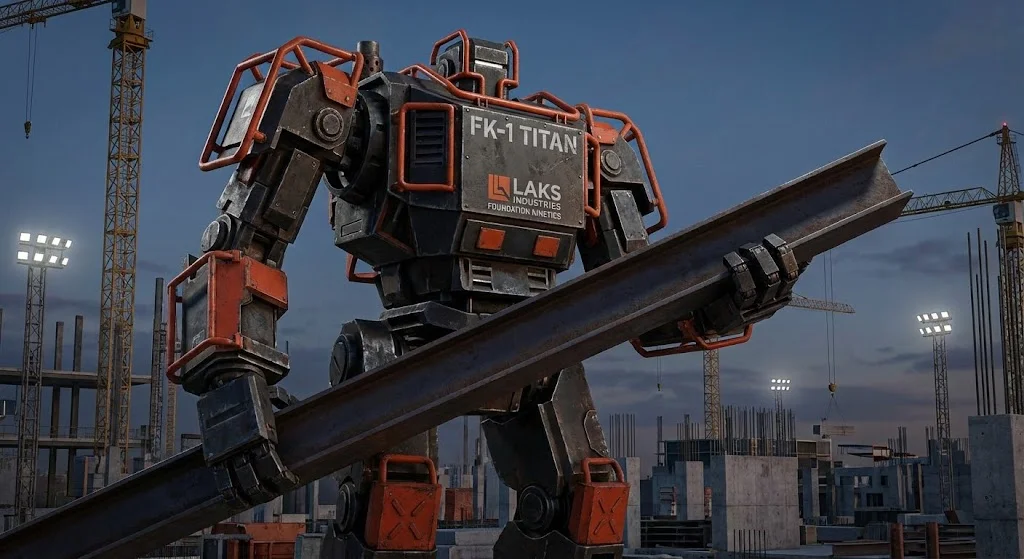
FIG 1.0: FK-1 COLOSSUS — GENERAL-PURPOSE HUMANOID PLATFORM
The skeleton. Titanium-aluminum alloy (Ti-6Al-4V) primary frame for the load-bearing structure — spine, pelvis, upper legs, shoulders. Carbon-fiber-reinforced polymer for secondary structures — forearms, lower legs, rib cage. Tungsten carbide wear surfaces at every articulating joint. The material selection is not exotic; it is the same alloy family used in aircraft landing gear and orthopedic implants, chosen for its fatigue life at the loads and cycle counts a humanoid encounters over a 50,000-hour service life.[4] All structural components supplied by Metallic Sciences.
The muscle. Every motor, actuator, and energy storage cell in the FK-1 is supplied by Highfield Magnetics. The physics is straightforward: a motor is a magnetic device, a battery stores energy that is delivered through electromagnetic conversion, and the entire power path from stored charge to mechanical torque at the joint is fundamentally an exercise in magnetic field manipulation.[5] Highfield supplies quasi-direct-drive brushless motors at the major joints — hips, knees, shoulders, elbows — where torque density and backdrivability matter most. Series elastic actuators at the wrists and ankles provide the compliance needed for stable ground contact and delicate manipulation. A high-density solid-state battery pack occupies the torso cavity, with hot-swap capability for continuous operation across shift changes.
The brain. Aetheric Sciences supplies the entire perception and decision stack. Stereo vision, LIDAR, tactile sensor arrays across every fingertip and palm surface, a six-axis IMU cluster at the pelvis for balance, and force-torque sensors at every wrist and ankle. The world model runs on a transformer-based architecture that fuses all sensor modalities into a unified spatial representation, updated at 200 Hz. Motion planning operates in real time against this world model, generating joint trajectories that satisfy task constraints while maintaining dynamic balance.[6] Edge compute at each limb handles local servo loops at 1 kHz, while the central trunk processor handles planning, perception, and task coordination.
The hands. The hands are the most difficult subsystem in any humanoid. The human hand has 27 bones, 27 joints, and 34 muscles, producing a manipulation envelope that no existing robotic hand fully replicates. The FK-1 targets 22 degrees of freedom per hand — enough for tool use across the full range from precision screwdriver to pneumatic jackhammer. Fingertip force resolution targets 0.1 N, enabling tactile discrimination between surface textures and materials. Compliant gripper pads from Polymer Press — non-Newtonian polymer that yields under low force and stiffens under impact — protect fragile components during assembly operations.[7]
REQUIRES: Ti-6Al-4V structural frame from Metallic Sciences — fatigue life at humanoid duty cycles requires aerospace-grade alloy processing
REQUIRES: Quasi-direct-drive brushless motors from Highfield Magnetics — torque density and backdrivability at every major joint
REQUIRES: Perception and decision stack from Aetheric Sciences — real-time world model fusion at 200 Hz across all sensor modalities
ENABLES: Automated assembly for Lorentz Aerospace — FK-1 platforms perform hull assembly and coil winding tasks
ENABLES: Hazardous environment operations for Stellar Furnace — beryllium shell replacement under hot-cell conditions
Open Unknowns
- No robotic hand has achieved 22 degrees of freedom with 0.1 N fingertip force resolution in a form factor compatible with human tool geometry. The best demonstrated systems achieve approximately 16 DOF.
- Real-time whole-body dynamic balance on unstructured terrain at the target 200 Hz update rate has not been demonstrated at the FK-1 mass (estimated 80–100 kg).
- 50,000-hour service life for titanium-alloy articulating joints at humanoid duty cycles is projected from aerospace fatigue data but not validated in a walking platform.