Foundation Kinetics
ROBOTICS, DIRECT-DRIVE MANUFACTURING & LIGHTS-OUT PRODUCTION
FOUNDATION KINETICS
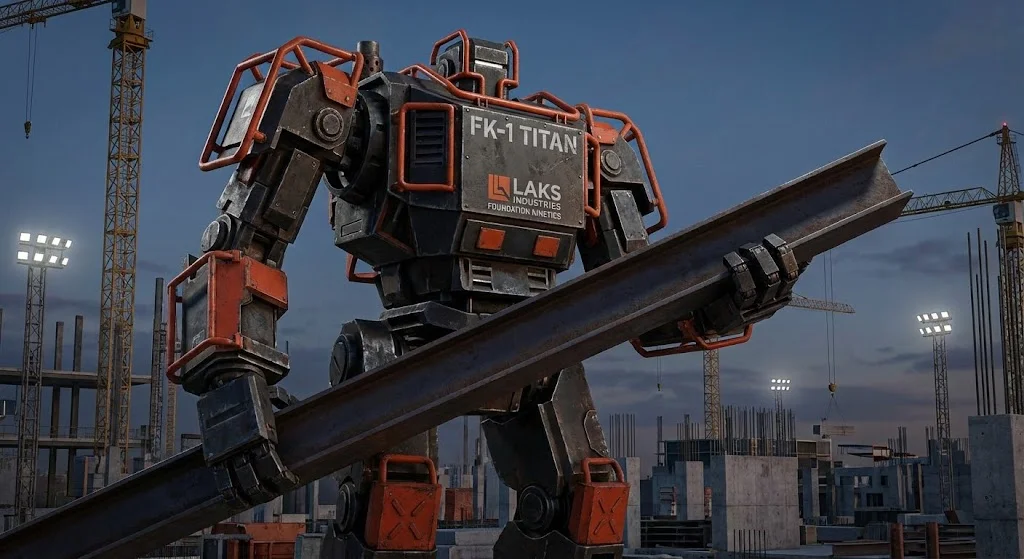
Foundation Kinetics makes invention repeatable. The flagship product family spans three named systems: the FK-1 Titan large-format direct-drive machine cell, the Scarab class of compact micro-positioning robots, and the Arachne-7 weaver for vehicle-scale hull assembly. Each ships into peer companies as the production-cell hardware that turns artisanal laboratory procedures into instrumented, repeatable machine runs at industrial cadence.
Advanced machines die when fabrication, assembly, tuning, and testing remain artisanal. A breakthrough laboratory result that requires a skilled operator to reproduce becomes a paper, not a product. Foundation Kinetics's discipline is the systematic conversion of laboratory craft into machine-cell capability: actuators, sensors, fixtures, motion control, machine-vision QA, and closed-loop process correction integrated into self-contained production cells that run unattended.
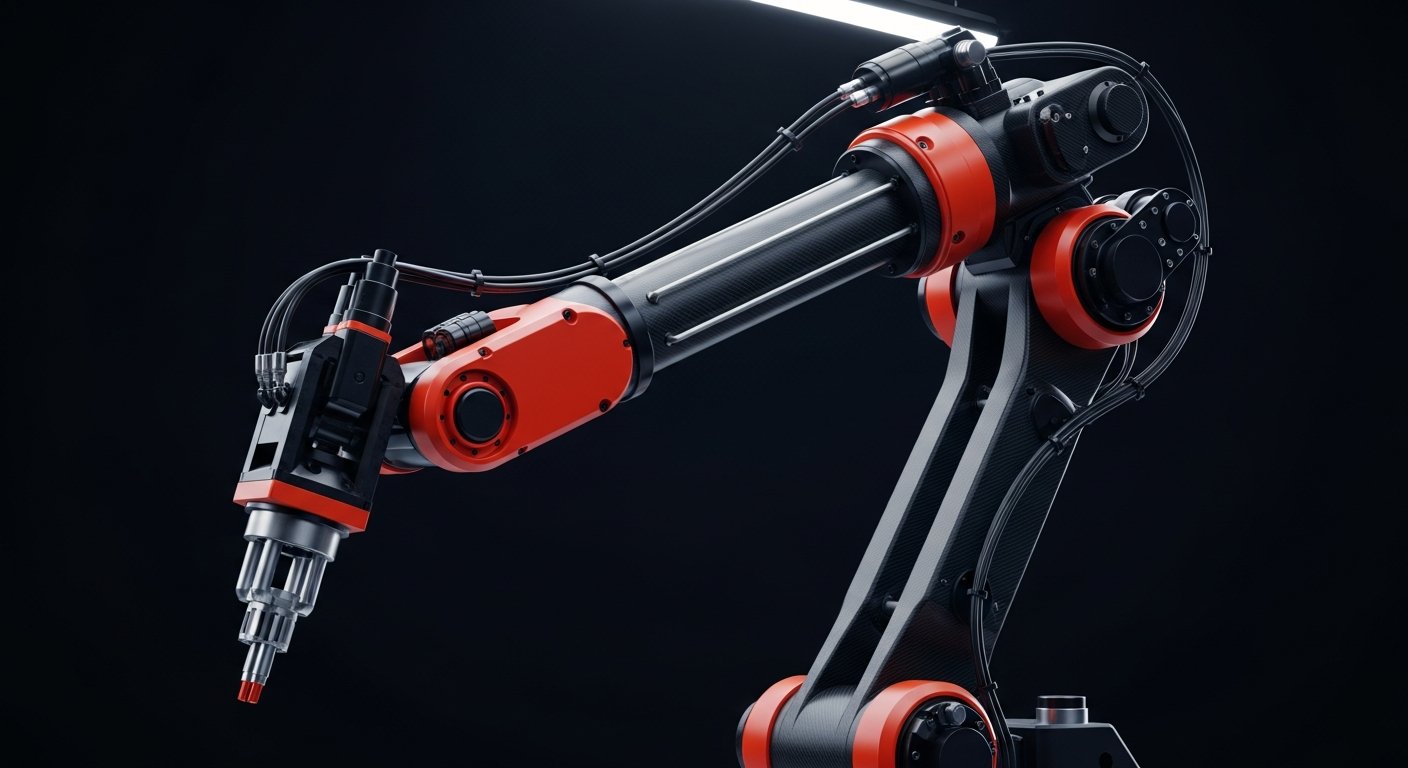
A laboratory result is a paper. A machine cell is a product. We build the cells.
01 — The Discipline
FK HERO STRUCTURE
A machine cell is a self-contained production unit: actuators that apply controlled forces and motions, sensors that report the state of the workpiece and the process, fixtures that hold the workpiece in known geometry, a process-control system that closes the loop between the sensors and the actuators, and a quality-assurance station that verifies the output meets specification before release. The cell is the atomic unit of industrialised production; everything upstream of the cell (raw material, design intent) and downstream of the cell (assembly, distribution) is logistics. The cell is where the invention happens repeatably.1
Foundation Kinetics engineers three classes of cell against the network's customer demand. Large-format direct-drive cells (FK-1 Titan family) for multi-tonne precision machining of refractory metals, polymer-V composite stacks, and superconducting coil mandrels. Micro-positioning cells (Scarab family) for sub-micrometre assembly of fragile components: coil-winding into a magnet form, micro-electrode placement in a Stellar Furnace converter, optical-alignment in a Soliton Block. Hull-scale weaver cells (Arachne-7 family) for vehicle-scale composite layup: the Lorentz Aerospace XR-1 hull is woven by an Arachne-7 from carbon-nanotube structural fibre.2
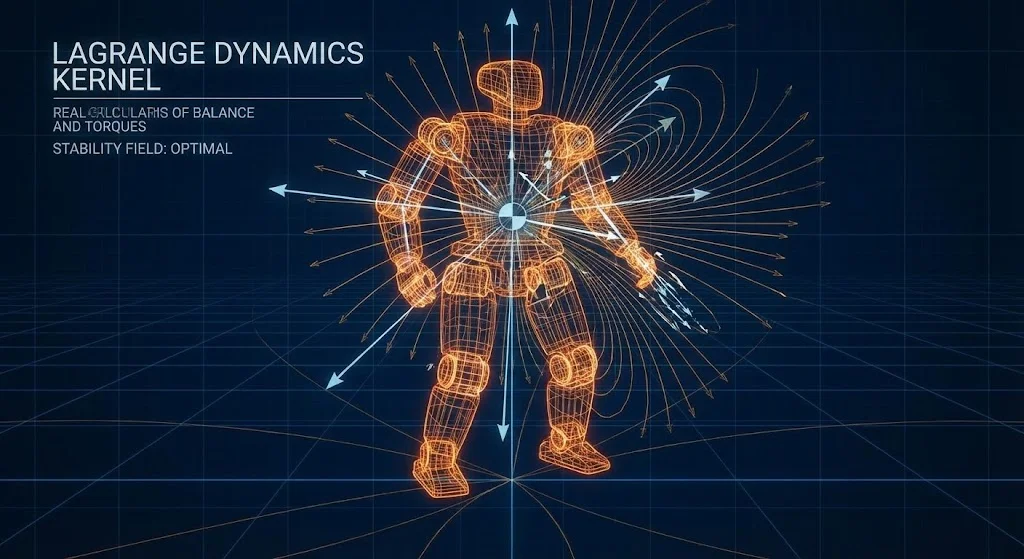
The discipline is the engineering of these three cell classes against a shared technology platform: direct-drive permanent-magnet motors for actuation, machine-vision metrology for in-process feedback, closed-loop process control with sub-millisecond cadence, and instrumented QA stations that capture the cell's process state as a structured record. The deliverable is not the cell, it is the productionisation envelope the cell defines — how repeatable, how fast, how clean, how monitored.
02 — The Bottleneck
FOUNDATION LIFT
Industrial manufacturing's central engineering challenge is the distance between a laboratory demonstration and a productionised cell. A laboratory result depends on a skilled operator's judgement at dozens of process steps; the same procedure run by a different operator, or by the same operator on a different day, produces measurable variation. Productionisation is the systematic removal of operator judgement from the process — not by deskilling, but by instrumenting and closing the loop on each judgement so the same decisions are made by the machine the same way every time.3
Conventional industrial automation handles high-volume mature processes well (automotive assembly, semiconductor fabrication, beverage bottling). It fails at low-volume novel processes that depend on tight closed-loop feedback against in-situ measurement. The reason is sensor and process-knowledge integration: an automotive welding cell weld is the same weld every time; a Stellar Furnace converter electrode placement requires sub-micrometre alignment against a specific surface that varies slightly per blank. Conventional industrial automation cells cannot adapt their process to per-workpiece variation. Foundation Kinetics cells can.4
The deeper bottleneck is verification. A machine cell that runs unattended must produce verifiable output at every cycle. A cell that produces output without inline QA is just an unattended source of unknown-quality scrap. The Foundation Kinetics product line is engineered around in-process metrology — machine vision, surface profilometry, electrical-test stations, thermal imaging — integrated into the cell's process-control loop so the cell knows when it has produced an in-spec part and when it has produced a reject, before the part leaves the cell.
03 — The Machine Cell
LAGRANGE VECTORS
Three named cell families span the practical product line. Each is a complete deliverable: actuator stack + sensor stack + fixturing + control system + QA, not just a robot.
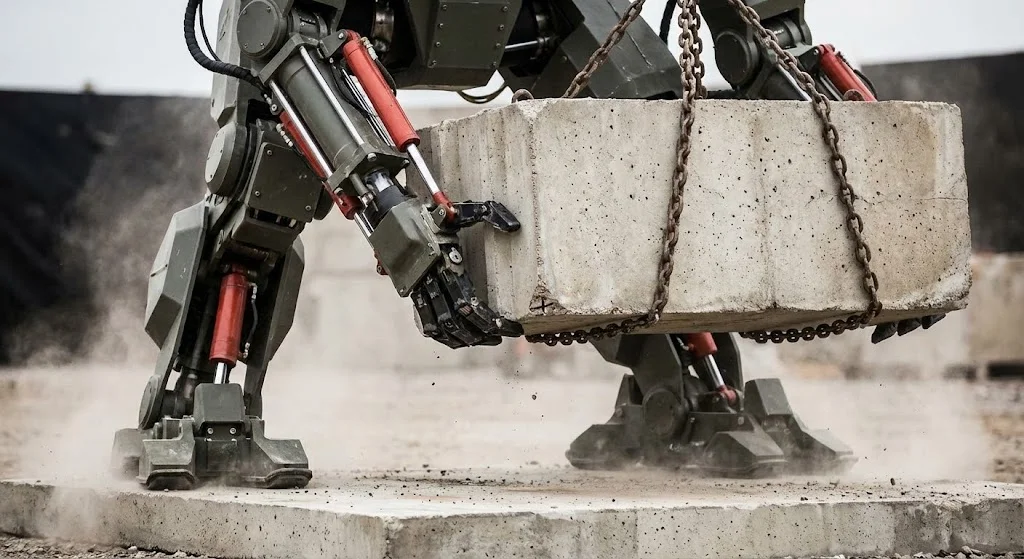
Five-axis direct-drive machine cell with a one-cubic-metre working volume and one-tonne workpiece capacity. Permanent-magnet rotor direct drive on every axis — no gearbox, no backlash, sub-micrometre positioning accuracy across the full working volume. Production applications: refractory metal billet machining for the Triazite product line, large-format polymer-V composite assembly, multi-component test-rig fabrication. Cell cycle time is process-dependent (minutes for finishing, hours for primary machining); the cell is engineered for continuous unattended operation in twelve-hour shifts with operator-supervised cassette changes between shifts.5
Sub-100-millimetre payload compact actuator family for sub-micrometre assembly work. Standard configurations: four-axis Cartesian (XYZA), five-axis with rotational tool head (XYZAB), six-axis with full-orientation end effector. Sub-five-micrometre positioning accuracy across a 200×200 mm working area. Vision-guided pick-and-place at programmable cadence (typical 0.5-second pick-place cycle). Applications: Stellar Furnace converter stage installation (the 24 traveling-wave-converter electrode stages per reactor), Highfield Magnetics REBCO coil winding (sub-millimetre tape positioning during multi-thousand-pancake stack assembly), Soliton Block optical alignment, Lorentz XR-1 coil-segment placement.6
Seven-axis composite layup robot for vehicle-scale hull assembly. Designed against the Lorentz Aerospace XR-1 hull as the gating application: ten-metre working volume, controlled-tension carbon-nanotube fibre placement at one-millimetre lay-up resolution, fibre-orientation control to within one degree, integrated UV-cure heads for resin-impregnated lay-up. Cell production rate is one full XR-1 hull layup in approximately three hundred hours of continuous operation; secondary applications include large-format pressure-vessel composite construction (Phase Flash chamber outer reinforcement) and Modular Habitats deployable-structure layup.7
04 — Lights-Out Experimental Production
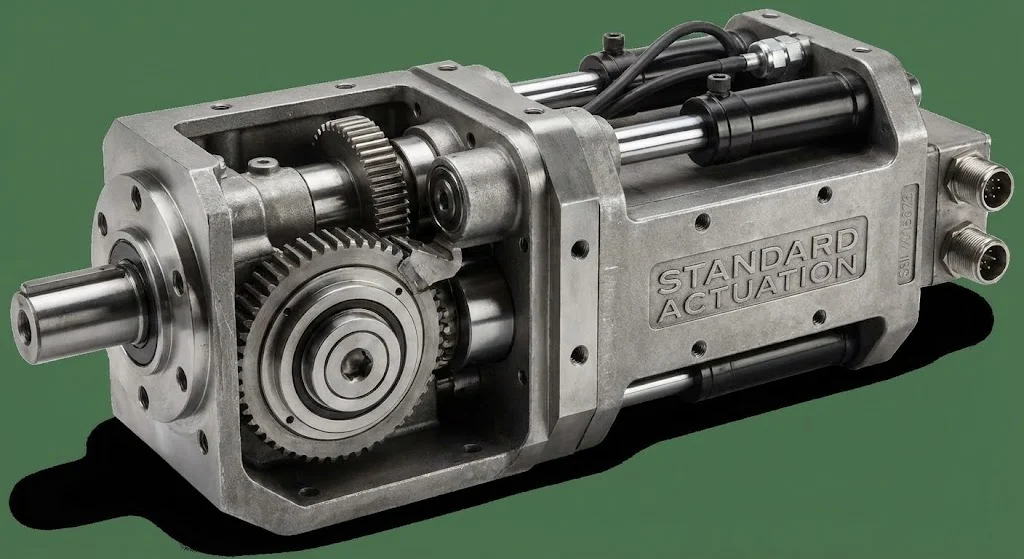
STANDARD ACTUATION DRIVE
The phrase “lights-out” means a manufacturing cell that runs unattended overnight, weekends, and through the night-shift. Foundation Kinetics extends the term: the cells run lights-out not only on production volume but on experimental work. A research scientist who would conventionally spend a day setting up a single test run can specify the experiment as a recipe, hand it to a cell, and walk away — the cell sets up, runs, measures, logs, and resets for the next recipe automatically.8
This capability requires the cell to handle three classes of operation in a single envelope: build (actuate the workpiece into the desired geometry), test (instrument the workpiece against the experimental measurement), and measure (capture the result, log it to a structured record, classify the result against acceptance criteria). The cell-builder's engineering work is integrating these three operations into a single sequenced recipe that the cell executes without operator intervention between steps. Foundation Kinetics's recipe-execution framework supports nested loops, conditional branching, and dynamic parameter sweeps within a single experimental campaign.
The recipe-execution surface is the operational interface the network's research engineering uses to drive experimental work. A typical campaign — characterising the operating envelope of a new alloy at twenty stress levels × thirty temperature levels × one hundred cycle counts — is six hundred thousand measurement points. Conventional manual testing would take a year of operator time; the same campaign on a Foundation Kinetics cell runs in three weeks of unattended operation.
The interface to future Edison-grade integration is left as forward work: when Edison generates a hypothesis that resolves into a structured experimental design, the design should be executable as a Foundation Kinetics recipe with no manual translation. The capability surface is engineered to support this; the integration itself is not built in this sprint.
05 — Precision, Throughput, and Feedback
Three operational metrics characterise every Foundation Kinetics cell: precision, throughput, and feedback latency. The three are mutually constrained — pushing one harder makes the others worse, and the engineering art is balancing them against the customer application.
The cells share a common sensor and control architecture so customers can mix configurations within a single production line without redeveloping the recipe framework. A Stellar Furnace electrode-assembly line, for example, uses Scarab cells for the micro-positioning steps and FK-1 Titan cells for the larger structural-component machining — the same recipe executor coordinates both classes through the same operator interface.
06 — Supplier & Integration Partners
Foundation Kinetics ships cells into seven peer companies as the production-and-test infrastructure for their flagship machines. The supplier-and-integration stack is the engineering of the cell-to-application chain.
Polymer Press — Co-extrusion forming cell automation, mould design, downstream forming-station integration. Joint development of Polymer-V cassette-handling robotics.
Metallic Sciences — Refractory machining and finishing cells for the Triazite product line. Joint additive-metal cell automation for selective-laser-melting tungsten production runs.
Highfield Magnetics — Scarab-class robots for REBCO tape winding (multi-thousand pancake-stack assembly per Iron Horse coil). Cryogenic test-rig instrumentation. Joint development of quench-protection electronics characterisation cells.
Matter Kitchen — Pod-loading and cake-ejection mechanism design for the Matter Kitchen platform. Scarab-class compact actuators for the cassette-change cycle.
Phase Flash — Pressure chamber manufacturing cells for the Oasis platform. V8 manifold precision-machining cells.
Plasma Press — Magnetic-bearing motion stage assembly. Galvanometer scanner precision integration.
Stellar Furnace — Scarab-class robots install the 24 traveling-wave converter electrode stages per SF-1 reactor. Beryllium-shell hot-cell replacement cells for first-wall service.
Lorentz Aerospace — Arachne-7 weaver for XR-1 hull assembly at vehicle scale. Scarab compact actuators for coil-winding micro-positioning at five-micrometre tolerance. Robotic test rigs for static envelope characterisation.
Fermat Logistics — Automated cargo handling systems — robotic loading, unloading, and inter-modal transfer at depot nodes across the transport network.
Polymer Press → Metallic Sciences → Highfield Magnetics → Matter Kitchen → Phase Flash → Plasma Press → Stellar Furnace → Lorentz Aerospace → Fermat Logistics →
07 — Validation Hooks
Four measurable claims define the forward roadmap. Each is intended to be a future Crystal Ball-grade prediction registration once the prediction infrastructure exists.
HOOK A — Scarab cell defect rate. The current Scarab-class pick-and-place defect rate is approximately 100 parts-per-million at design cycle time. The forward target is 10 ppm, which makes the cell competitive with semiconductor-grade pick-and-place for the highest-yield-sensitive customer applications (Stellar Furnace converter electrode placement, Soliton Block optical alignment). The gating measurement is sustained 10-ppm defect rate across a 100,000-cycle production run.9
HOOK B — FK-1 Titan unattended duty cycle. The current FK-1 Titan duty cycle is approximately 12 unattended hours per cassette change. The forward target is 72 unattended hours (weekend-cycle), which lets a single operator manage a multi-cell production line at the same overhead as a single-cell shift. The gating measurement is a 72-hour continuous production run on a representative refractory-metal machining job at design accuracy.
HOOK C — Arachne-7 hull-cycle time. The current Arachne-7 hull-layup cycle is approximately 300 hours per XR-1-class hull. The forward target is 100 hours, achieved through multi-head parallel layup with synchronised tow-tension control. The gating measurement is a successful 100-hour layup of a representative test hull at design fibre-orientation accuracy.10
HOOK D — autonomous-experiment recipe portability. The longer-term research target is recipe portability across cell classes: an experimental campaign specified for a Scarab cell should be executable on a FK-1 Titan with appropriate parameter remapping, and an Arachne-7 recipe should compose from sub-recipes that run on simpler cells. The gating measurement is end-to-end portability for a representative experimental campaign across three cell classes with no operator translation. This hook is the platform-grade infrastructure that the future Edison integration would consume; it is forward work and not implemented in this sprint.11
RESEARCH REPOSITORY
Robotics, autonomous laboratories, industrial automation, metrology, additive manufacturing, and machine vision.
Foundation Kinetics is the engineering of machine cells as the unit of industrialised production. Three flagship cell families — FK-1 Titan, Scarab, Arachne-7 — ship into peer companies as the production-and-test infrastructure that turns laboratory craft into machine-run repeatability. The discipline is the systematic conversion of operator judgement into instrumented closed-loop control, with the recipe-execution framework as the operational interface research engineering uses to drive experimental work.
(wiki) Industrial Robot • (wiki) Direct-Drive Linear Motor • (wiki) Backlash • (wiki) CNC Machining
Reference Links — Autonomous Labs & Industrial Automation(wiki) Robot-Assisted Chemistry • (wiki) Self-Driving Laboratory • (wiki) PLC • (wiki) Lights-Out Manufacturing
Reference Links — Metrology & Machine Vision(wiki) Metrology • (wiki) Machine Vision • (wiki) CMM • (wiki) Optical Profilometer
Reference Links — Additive Manufacturing(wiki) 3D Printing • (wiki) Composite Manufacturing • (wiki) Selective Laser Melting • (wiki) Automated Fibre Placement
- Craig, J.J. Introduction to Robotics: Mechanics and Control. 4th Ed. Pearson, 2017. ISBN 978-0-13-348905-9.
- Groover, M.P. Automation, Production Systems, and Computer-Integrated Manufacturing. 5th Ed. Pearson, 2019. ISBN 978-0-13-462955-1.
- Sproewitz, A. et al. Robotic Cell Design for High-Throughput Experimentation. Springer, 2020. ISBN 978-3-030-31755-3.
- Shahabaz, S.M. et al. Composite Manufacturing: Materials, Product, and Process Engineering. CRC Press, 2018. ISBN 978-1-498-71012-1.
- Slocum, A.H. Precision Machine Design. Society of Manufacturing Engineers, 1992. ISBN 978-0-872-63492-8.
- Burger, B. et al. "A mobile robotic chemist." Nature 583, 237–241 (2020). The reference paper for autonomous laboratory robotics.
- MacLeod, B.P. et al. "Self-driving laboratory for accelerated discovery of thin-film materials." Sci. Adv. 6, eaaz8867 (2020).
- Hwang, R. et al. "High-throughput integrated combinatorial materials science." Nature 470, 481–485 (2011).
- Kusiak, A. "Smart manufacturing." Int. J. Prod. Res. 56, 508–517 (2018). Reference for the integrated automation framework.
- ● Machine cell as atomic unit of industrialised production: standard manufacturing engineering vocabulary. The cell concept dates to the cellular manufacturing literature of the 1970s.
- ● Three cell classes: program structure. Class boundaries are operational (scale + accuracy + cycle time) rather than fundamental physics.
- ● Operator-judgement variation: standard process-engineering observation. Documented across every productionised industry transition.
- ● Per-workpiece adaptive automation: engineering frontier. Distinct from conventional repeating-pattern automation; requires integrated in-process sensing and closed-loop process correction.
- ● FK-1 Titan unattended duty cycle: engineering target. Constituent technologies (direct-drive motors, machine vision, in-process metrology) are individually mature; integrated reliability for 12-hour unattended operation is the platform engineering work.
- ● Sub-5-µm precision pick-and-place: standard industrial robotics capability. Multiple vendors ship at this precision.
- ● Arachne-7 hull-scale weaver: engineering program target. Automated fibre placement is mature technology at smaller scales (aerospace components); ten-metre vehicle-scale layup is the engineering hop.
- ● Recipe-execution framework for build/test/measure: standard high-throughput-experimentation framework. Productisation across three cell classes is the engineering work.
- ● Sub-10-ppm Scarab defect rate: engineering target. Comparable to semiconductor-grade automation; the gap is the integrated QA-and-correction loop.
- ● 100-hour Arachne-7 hull cycle: engineering target. Requires multi-head parallel layup with synchronised tow-tension control.
- ● Recipe portability across cell classes: speculative platform target. Sub-recipe compositionality is a research goal; the engineering scope is substantial.